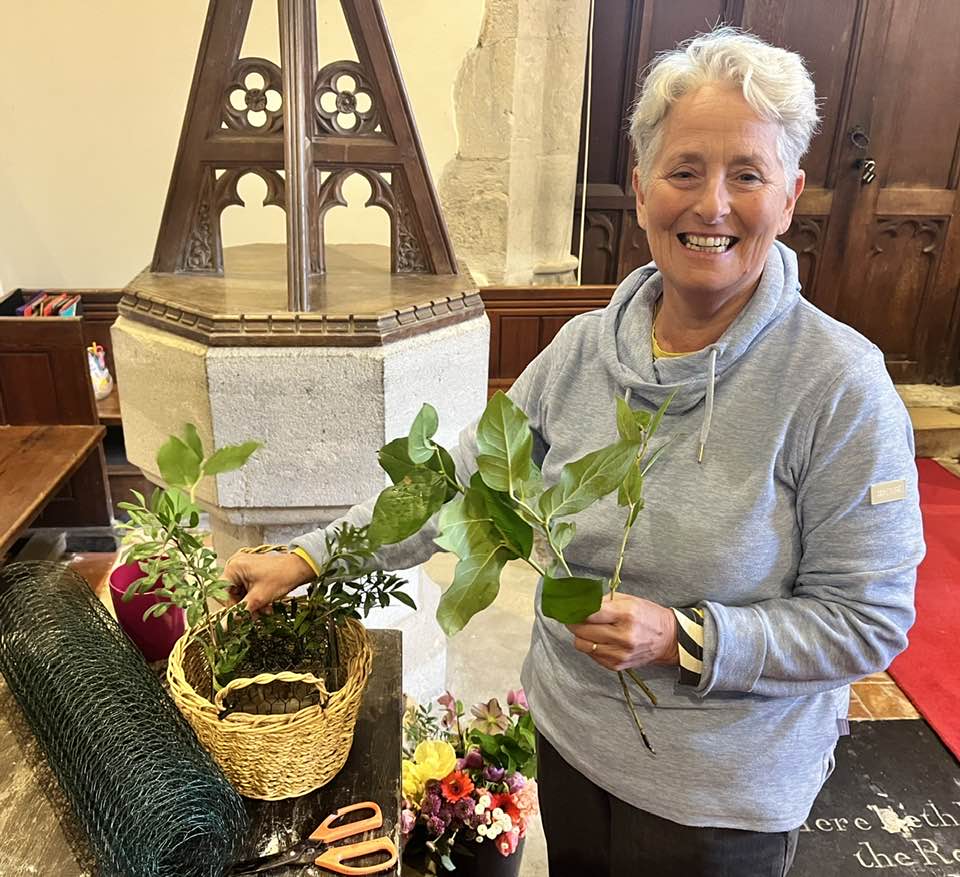
Photo: Lin demonstrates sustainable floristry at St Martin's Church, Ryarsh
A practical workshop at St Martin’s Church in Ryarsh has shown how small, creative changes can help churches care more intentionally for the environment echoing a wider call across the Church of England to use more sustainable flowers in worship.
Members of the flower team at St Martin’s recently gathered for a hands-on tutorial led by Lin, one of the church’s volunteers and a professional florist.
Her aim was simple: to demonstrate how beautiful church arrangements can be created without using floral foam, a commonly used material that contains plastic and does not biodegrade.
Instead, Lin shared a range of traditional and inventive alternatives.
“It’s all about your containers,” she explained enthusiastically, as she demonstrated how everyday items can replace foam while still supporting elaborate displays.
Among her suggestions were using scrunched chicken wire in a dish placed inside a basket as a base for arrangements, and tying covered test tubes to sticks to give height for displays in church windows or on pedestals.
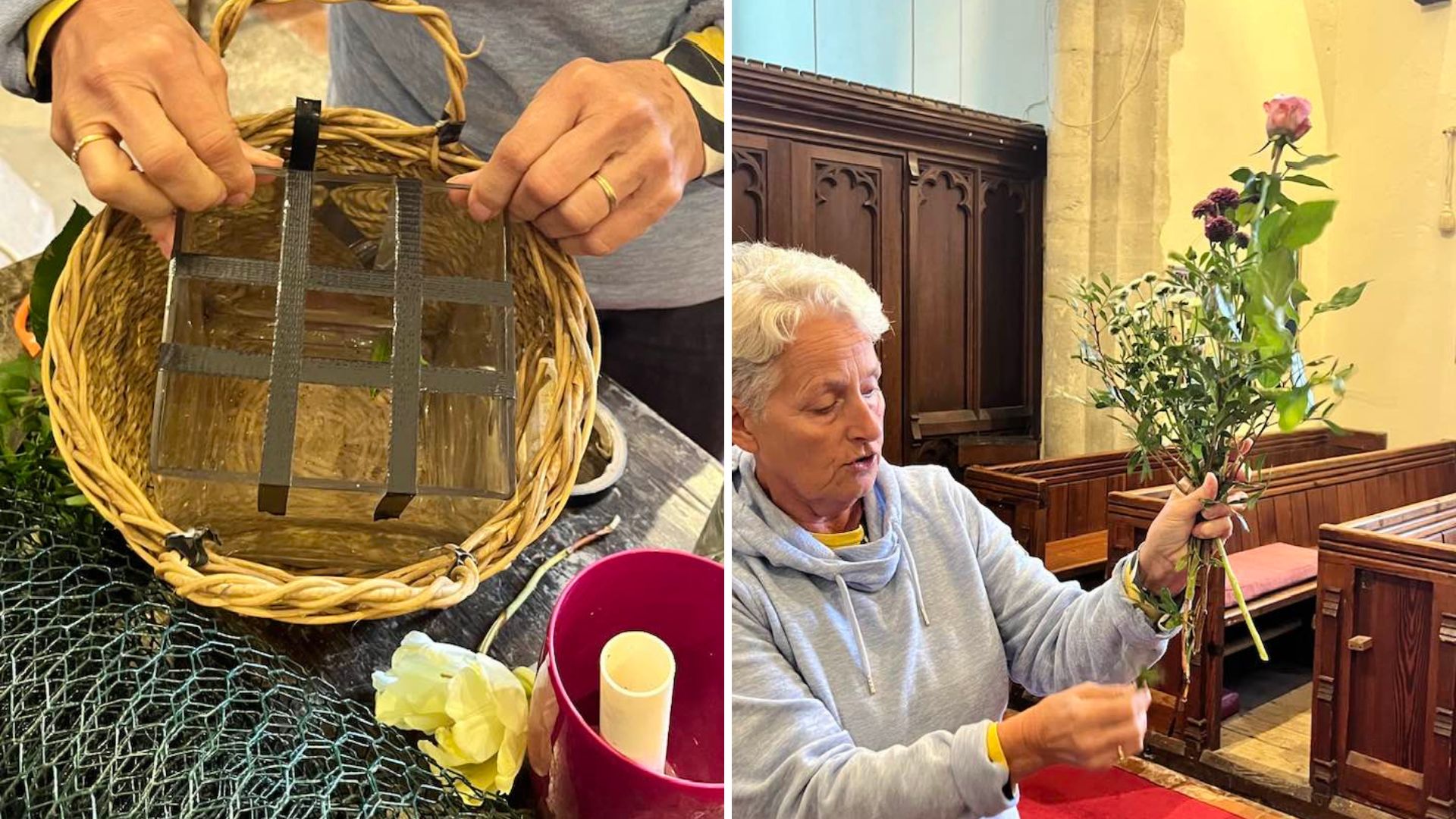
Photo: Lin demonstrates ideas to fill the containers avoiding foam.
Other tips included filling containers with pieces of plastic tubing or taping a grid across a vase to hold stems securely in place.
She also demonstrated how to hand-tie flowers and foliage before placing them into a pot, which is a classic floristry technique that creates a natural and reusable arrangement.
For the volunteers taking part, the workshop was both practical and inspiring, with one reflecting that:
"These new skills will help ensure that arrangements for the church’s upcoming flower festival are not only beautiful, but also more environmentally friendly."
The initiative at Ryarsh reflects a growing movement across the Church of England following a decision by the General Synod to encourage the use of more seasonal, locally sourced flowers and to phase out the use of floral foam where possible.
Watch: A film was shown at General Synod about The Sustainable Church Flowers movement which began as a grassroots initiative in the small rural parish of Harpley, Worcestershire
Among those supporting the motion was Jane Rosam, one of the Diocese’s representatives at General Synod, who spoke passionately about the importance of aligning worship with care for the natural world.
“What we place on our altars says something, says much about what we value,” she told the Synod. “We should not be people who bless the Creator while at the same time contributing to the harm of creation.”
Jane emphasised that using seasonal flowers and locally sourced foliage can deepen the connection between worship and the landscapes around churches.
“These flowers offer beauty with integrity supporting local growers, reducing emissions and connecting our worship to the landscape around us,” she said.
“Reminding us that God is present not only in the showy and exotic but in the hedgerow, the garden, the field and the changing seasons."
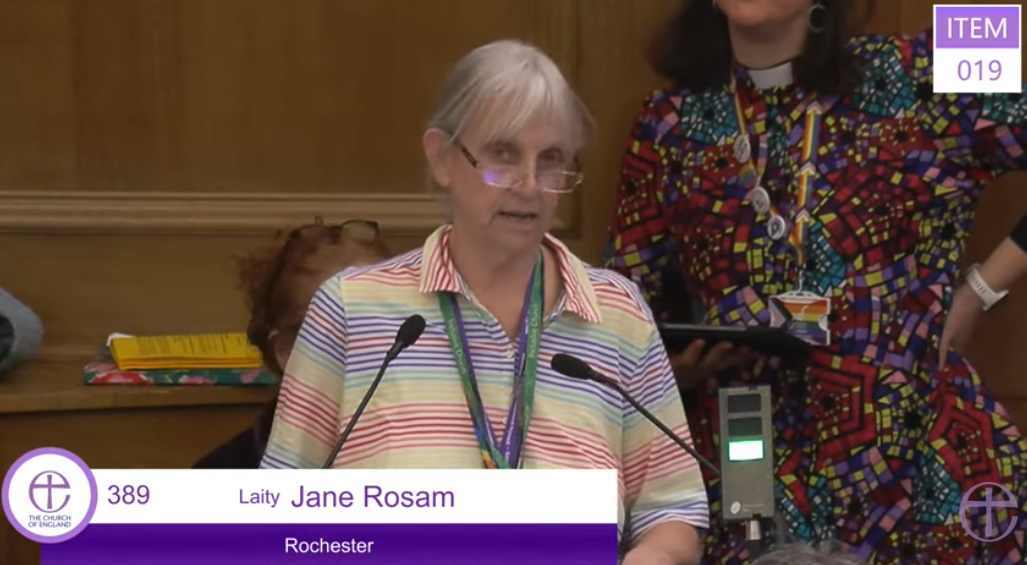
Photo: Jane Rosam speaking as part of the debate on sustainable floristry at General Synod
Far from diminishing church decoration, she said that the change offers an opportunity for renewal.
“This is not about making our churches plain, it is about making our worship truthful,” she said. “It is about aligning our practice with our prayers.”
At St Martin’s in Ryarsh, the flower team’s willingness to learn new methods is a practical example of that vision in action.
By rediscovering traditional techniques and adapting modern creativity, volunteers are showing how churches can continue to celebrate beauty in worship while reducing their environmental impact.
Jane described the shift as a simple but meaningful step: “Let our churches and their altars speak not only of beauty, but of responsibility. Not only of tradition, but of transformation.”
As churches across the country explore more sustainable ways of arranging flowers, the work of volunteers like those at Ryarsh shows how caring for creation can begin with the everyday details of parish life even something as ordinary, and as cherished, as flowers in church.